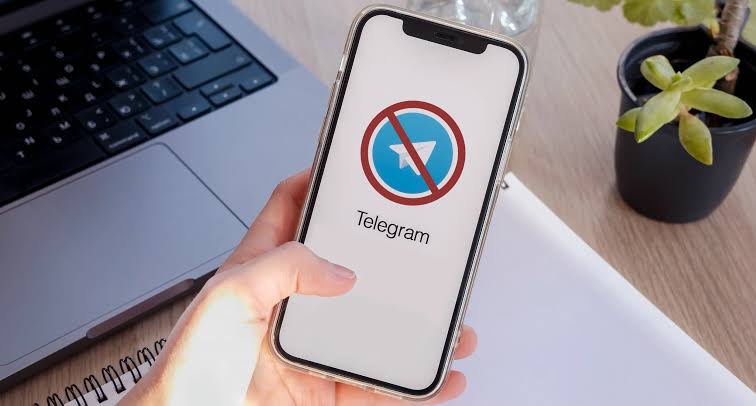
The Paradox of Scale: Why Telegram’s Structure Is Becoming a Global Liability

Table of Contents:
The digital landscape is currently witnessing a paradigm shift. For over a decade, users gravitated toward platforms that promised untethered freedom, minimal oversight, and explosive reach. Telegram, as the flagship of this philosophy, has seen meteoric growth, boasting over 950 million monthly active users as of 2024. However, this growth has come at a steep price. The recent series of legal interventions in France, India, and Spain demonstrates that Telegram’s reliance on a singular, centralized, and founder-centric authority model has transformed its greatest strength—autonomy—into a fundamental structural liability.
The Myth of the Independent Messenger and the "Founder Trap"
The arrest of Pavel Durov in France was not merely a news item; it was a systemic shock to the tech world. It exposed a vulnerability that most modern decentralized organizations have spent years mitigating: the "Key Man Risk." When a platform’s identity, legal posture, and strategic direction are inseparable from one individual, a personal legal crisis for that person becomes an existential threat to the entire service.
Unlike global conglomerates that utilize complex legal shields, decentralized governance, and robust regional compliance teams, Telegram has operated under a model that prioritizes agility over institutional formality. While this allowed for rapid feature deployment, it created a "single point of failure." When that point is targeted by regulators, the entire ecosystem—serving nearly a billion people—faces the risk of suspension or systemic instability. The statistics are clear: under the European Union’s Digital Services Act (DSA), platforms exceeding 45 million monthly active users are classified as "Very Large Online Platforms" (VLOPs). These entities are legally mandated to implement rigorous risk management systems, algorithmic transparency, and effective content moderation. Telegram’s historical hesitation to fully integrate these compliance mechanisms has placed it in a direct collision course with the legal frameworks of the Western world.
Beyond Technical Reliability: The Crisis of Legal Availability
In recent years, the nature of "messenger risk" has evolved. Users previously feared technical failures or server downtime. Today, the primary threat is legal availability. The incidents in Spain, where copyright holders sought to block the entire platform due to the actions of specific channels, illustrate this shift.
-
The Reputational Cost: When a communication platform is perceived as an ungoverned harbor for illicit activities, it loses the institutional trust required for mass enterprise adoption. Businesses are inherently risk-averse; they cannot rely on a channel that might be blocked by a court order on a whim.
-
Collateral Damage to Democracy: In nations like India, the friction between national security requirements and Telegram’s privacy-first ethos has led to regulatory pressure that threatens the utility of the app for journalists, activists, and small businesses alike. When regulators perceive a lack of cooperation, they treat the entire platform as a monolithic entity, ignoring the millions of legitimate, professional users caught in the crossfire.
The Future: Institutional Stability over Personality
As the "Wild West" era of digital communication draws to a close, the market is shifting toward a new model of maturity. Users are beginning to realize that "privacy" and "security" do not have to be synonymous with "chaos" or "lack of accountability." This is where the industry is pivoting toward professionalized, resilient, and compliant communication infrastructures.
The future of messaging will not be determined by which app offers the fastest feature updates, but by which app can provide consistent, reliable, and secure access across borders. We are moving toward a reality where corporate communication requires a stable foundation, immune to the impulsive decisions of individuals or the political pressures faced by singular owners. Reliability in the modern age requires a platform that is not just an app, but a reliable piece of digital infrastructure, immune to the risks of becoming a political bargaining chip in international legal disputes.
Leave a Comment
Comments
No comments yet. Be the first to comment!
You may also like
Telegram Tests Built-in Fact-Checking to Combat Misinformation
30-06-2025
Rating: 0 | Views: 2809 | Reading time: 2 min
Read →
TikTok Launches a Separate Version for the US
07-07-2025
Rating: 0 | Views: 3047 | Reading time: 2 min
Read →
Why More and More People Are Buying Ready-Made Accounts Instead of Growing Them from Scratch in 2026
20-05-2026
Rating: 0 | Views: 545 | Reading time: 6 min
Read →
Social media influences teenagers more than teachers, according to a UK study
25-08-2025
Rating: 0 | Views: 3106 | Reading time: 2 min
Read →
Meta has updated Facebook's design: what has changed
17-12-2025
Rating: 0 | Views: 1877 | Reading time: 3 min
Read →