Are Accounts Banned for Buying Gaming Profiles in 2026 — Risks and Causes of Suspension

Table of Contents:
- Is it possible to buy gaming accounts in 2026
- What can a purchased account be banned for
- How platforms can determine a change of owner
- Does buying an account always end in a ban
- In which games and services is the risk particularly high
- What problems are possible besides a ban
- What to check before buying a gaming account
- Is it worth buying a gaming account in 2026
- Conclusion
Do accounts get banned in 2026 for buying a gaming account?
Buying a gaming account may seem like an easy way to get access to a leveled-up profile, rare items, in-game currency, or a large amount of unlocked content. However, the technical ability to transfer access to another person does not mean that such a transaction is permitted by the rules of a specific game or platform. Therefore, the question "do accounts get banned for buying a gaming account" remains relevant in 2026.
The main risk is not only related to the purchase itself. After a change of owner, the usual usage pattern of the account changes: a new device, a different geography, a new IP address, updated data, and sometimes different payment information appear. In addition, the probability of a conflict between the seller and the buyer, the restoration of the profile by the initial owner, or the discovery of violations committed even before the transaction remains.
The probability of a ban depends on the rules of the specific platform, the account history, and the nature of the changes after the transfer. Therefore, there is no universal answer for all games: before purchasing, it is necessary to check the current service rules and evaluate not only the price, but also the possible consequences.
Is it possible to buy gaming accounts in 2026
In practice, it is technically possible to buy a gaming account: there are offers where the seller transfers the login, password, and other access data. But the technical possibility of a transaction is not equal to its permissibility. A user can gain access to an account that formally remains tied to the initial registration conditions and service rules.
If the question arises whether it is possible to buy gaming accounts, the first thing to do is to separate two concepts: the ability to transfer access and the right to such a transfer. A gaming platform may allow a user to use the account only personally and prohibit the sale, transfer, or provision of access to third parties. In this case, the transaction itself becomes a potential violation of the terms of service.
A separate question is whether the sale of gaming accounts is permitted by a specific platform. One cannot assume that if a sales listing exists, the service officially permits such a practice. Major platforms maintain strict restrictions: Steam prohibits the sale and transfer of accounts, Riot Games prohibits the sale, transfer, and provision of access to third parties, and Blizzard explicitly states that buying or selling an account can lead to its loss.
Therefore, before making a transaction, it is necessary to study the exact current terms of service of the required service. Conditions that were in effect a few years ago do not necessarily meet the requirements of 2026. Checking the rules is a basic element of security and the first way to understand how high the risk of sanctions is.
What can a purchased account be banned for
A ban for purchasing an account can be related to several circumstances. The most obvious reason is the violation of a rule that explicitly prohibits the sale, transfer, or sharing of an account. If the platform considers the account to be personal and non-transferable, the change of owner in itself creates a risk of sanctions.
A ban for purchasing a gaming account can also arise due to a suspicious change of country, IP address, or device. If the account was used from one geography for a long time, and immediately after the transaction starts to be regularly accessed from another device and from another country, such activity may differ from the owner's normal behavior.
A dispute between the former and new owner also becomes a problem. The seller can contact support, report the compromise of the account, or attempt to restore access. As a result, the buyer runs the risk of losing the account even after a successful data transfer.
Violations committed before the purchase should also be taken into account separately. If cheats were previously used on the account, prohibited methods of gaining advantages were applied, or there were already other rule violations, the new owner may face sanctions for a history they did not personally create.
Finally, payments matter. Suspicious transactions, payment chargebacks, disputed purchases, or mismatches in payment details can become an additional reason for review and restrictions.
How platforms can determine a change of owner
A gaming service does not necessarily have to see the actual transfer of money to notice a change in the nature of account usage. A combination of technical and behavioral signs can be important for assessing security.
One such sign is a change in habitual devices and geography. Regular logins from a new computer, phone, or console, especially combined with a sharp change in region, may differ from the normal activity of the account.
Sharp changes in account data can also attract attention: email, password, profile name, security settings, and other information. Changing individual parameters in itself does not always mean a violation, but a large number of changes in a short period can become part of the overall risk picture.
An additional source of information is support tickets. If the initial owner tries to return access, reports a hack, or claims an unauthorized transfer, the platform may initiate an investigation. In such a situation, it can be difficult for the buyer to prove their right to the account.
Finally, the recovery process is important. If the seller retains the data they used during initial registration, they potentially have more opportunities to confirm initial ownership. Therefore, the transfer of a login and password does not always mean the transfer of full control.
Does buying an account always end in a ban
No, not every purchase of a gaming account necessarily ends in an immediate ban. Sometimes after the transfer, the buyer continues to use the profile without visible sanctions. However, the absence of a ban immediately after the transaction does not mean that the risk has disappeared.
The ban may not happen at the moment of transfer. Verification may arise later due to unusual activity, a support request, a payment dispute, account recovery, or the discovery of an old violation. Therefore, assessing security solely by the first days or weeks of use is incorrect.
In addition to a full ban, other measures exist. Depending on the platform's rules, this can be a temporary ban, restriction of individual features, a warning, suspension of access, or complete loss of the account. For example, Epic's current terms provide for various measures for violations — from warnings and temporary restrictions to suspension or termination of the account.
Thus, the question "can a purchased account be banned" cannot be reduced solely to the probability of an instant ban. It is necessary to consider the full spectrum of sanctions and the fact that the acquired account may remain unstable in terms of ownership.
In which games and services is the risk particularly high
The risk is especially noticeable where the rules explicitly prohibit the transfer of accounts. Major services for which it is necessary to carefully check such restrictions include Steam, Riot Games, Battle.net, and Epic Games.
In Steam, the sale and transfer of accounts are prohibited by the service terms. Therefore, even if the seller promises to completely change the data and transfer all access to the buyer, this does not override the platform's rules.
In the Riot Games ecosystem, it is also necessary to consider restrictions on the sale, transfer, and provision of access to third parties. Consequently, the buyer must evaluate not only the cost of the profile, but also the risk of losing access due to rule violations.
Battle.net, associated with Blizzard games, also poses a high risk in account transactions: Blizzard's rules explicitly warn of the potential loss of the account upon purchase or sale.
For Epic Games, the situation requires a separate study of current terms and the list of possible sanctions. It is important to understand that different services may apply different measures, so one cannot automatically transfer the rules of one platform to another.
The main principle is the same: the stricter the platform's rules regarding account transfer, the higher the risk that the transaction will end in restriction, blocking, or loss of the profile.
What problems are possible besides a ban
The risks of buying a gaming account are not limited to blocking. Even if no sanctions from the platform follow, the buyer may face the loss of access for other reasons.
The most common problem is the recovery of the account by the seller. If the initial owner retains the old email, registration confirmations, payment history, or other information, they may try to prove initial ownership. As a result, the buyer can lose access after having already paid money.
Another risk is the loss of purchased games, items, and in-game currency. If access to the account is terminated, digital purchases and accumulated progress may become unavailable along with it. At the same time, the possibility of compensation is not guaranteed.
The inability to prove ownership also becomes a problem. The buyer may have correspondence with the seller and proof of payment, but this does not necessarily mean recognition as an owner by the platform. If the service prohibits account transfer, the transaction itself may not create a protected right to the account for the buyer.
Finally, in the event of a conflict, support may refuse to help the buyer precisely on the issue of account transfer. Therefore, the security of the transaction cannot be evaluated solely by the reliability of the seller or the payment method.
What to check before buying a gaming account
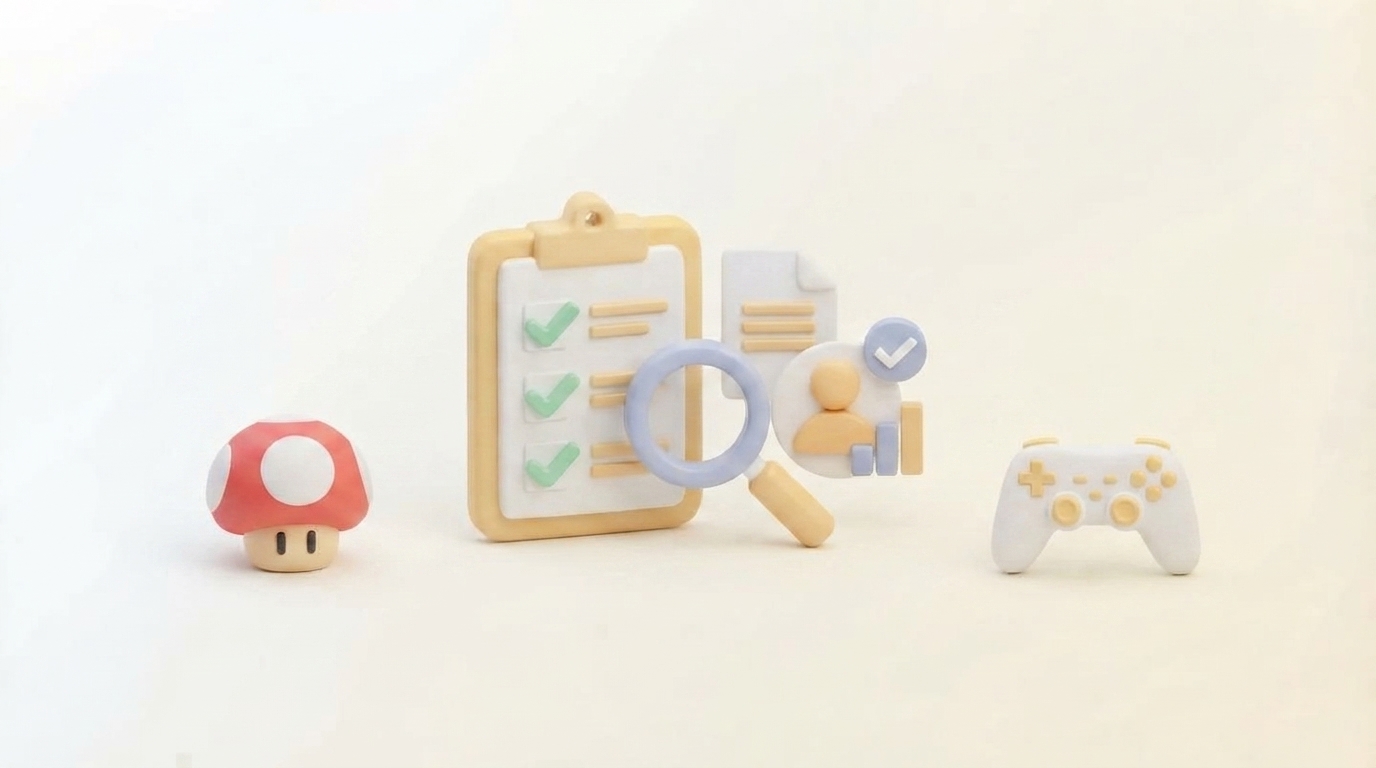
If a user is still considering a purchase, the first step should be to check the rules of the specific game or service. It is necessary to find the current provisions regarding the sale, transfer, and provision of access to accounts. This is more important than the seller's promises that "accounts never get banned for this."
Next, you should check the account history. The more information available about its past, the easier it is to assess the potential risk. It should be found out whether there were warnings, blocks, restrictions, or other sanctions.
Special attention should be paid to the origin of games and in-game items. If assets were obtained as a result of dubious operations or violations, the new owner may face the consequences of someone else's actions.
It is also necessary to understand what kind of access is being transferred. A single login and password may not be enough. The associated email, phone, two-factor authentication, backup recovery methods, and other security elements are important. If the seller retains critically important access, the buyer effectively does not get full control.
However, even a full technical transfer does not override the platform's rules. You can change the password and contact details, but this does not turn a prohibited transaction into a permitted one. Therefore, the verification of all accesses should be regarded as a technical security measure, not as a way to bypass the rules.
Is it worth buying a gaming account in 2026
The decision to purchase depends on the specific platform, price, and the user's attitude toward risk. If the rules explicitly prohibit sale or transfer, the potential benefit often does not justify the possible consequences.
The price of an account should be evaluated not only by the number of games, character level, item rarity, or the amount of in-game currency. The probability of blocking, account recovery by the seller, and the loss of invested money must be included in the calculation.
Special caution should be exercised regarding offers where the seller promises absolute security. No one can guarantee that the platform will not apply sanctions in the future if the account transfer violates its rules. Similarly, it is impossible to guarantee that the original owner will not try to restore access.
If the main goal is to get a game, item, or progress, it is safer to consider legal alternatives: buying the game on your own account, official in-game purchases, promotions and discounts, permitted ways of obtaining items and progress. Such an option may cost more or take more time, but it reduces the risk of losing the account.
Ultimately, a purchase may look profitable only at the moment of the transaction. The real cost must take into account security, access stability, and the possibility of sanctions.
Conclusion
There is no definitive answer to the question "do accounts get banned for buying a gaming account" for all services. In 2026, much depends on the specific platform and its current rules. If the sale or transfer of an account is prohibited, the risk of sanctions remains even with a technically successful change of data.
It is important for the buyer to consider more than just a possible ban. There are risks of account recovery by the former owner, loss of games, items, and currency, the impossibility of proving ownership, and the lack of support in a dispute.
Therefore, before purchasing, it is necessary to check the terms of service of the specific platform, account history, the presence of blocks and restrictions, the origin of digital assets, and the possibility of a full transfer of necessary accesses. But even an ideally technical transfer does not exclude subsequent blocking or account recovery.
In short: is it safe to buy gaming accounts? Only after a thorough evaluation of rules and risks — and even then, there is no universal guarantee of security. The stricter the platform is about account transfers, the less justified the risk becomes.
Leave a Comment
Comments
No comments yet. Be the first to comment!
You may also like
How Telegram Reduced the Quality of Media Content
21-11-2025
Rating: 0 | Views: 2192 | Reading time: 3 min
Read →
The EU Demands TikTok to Change Its "Addictive" App Design
11-02-2026
Rating: 0 | Views: 1546 | Reading time: 3 min
Read →
Google will pay $425 million for illegally collecting user data
05-09-2025
Rating: 0 | Views: 2319 | Reading time: 3 min
Read →