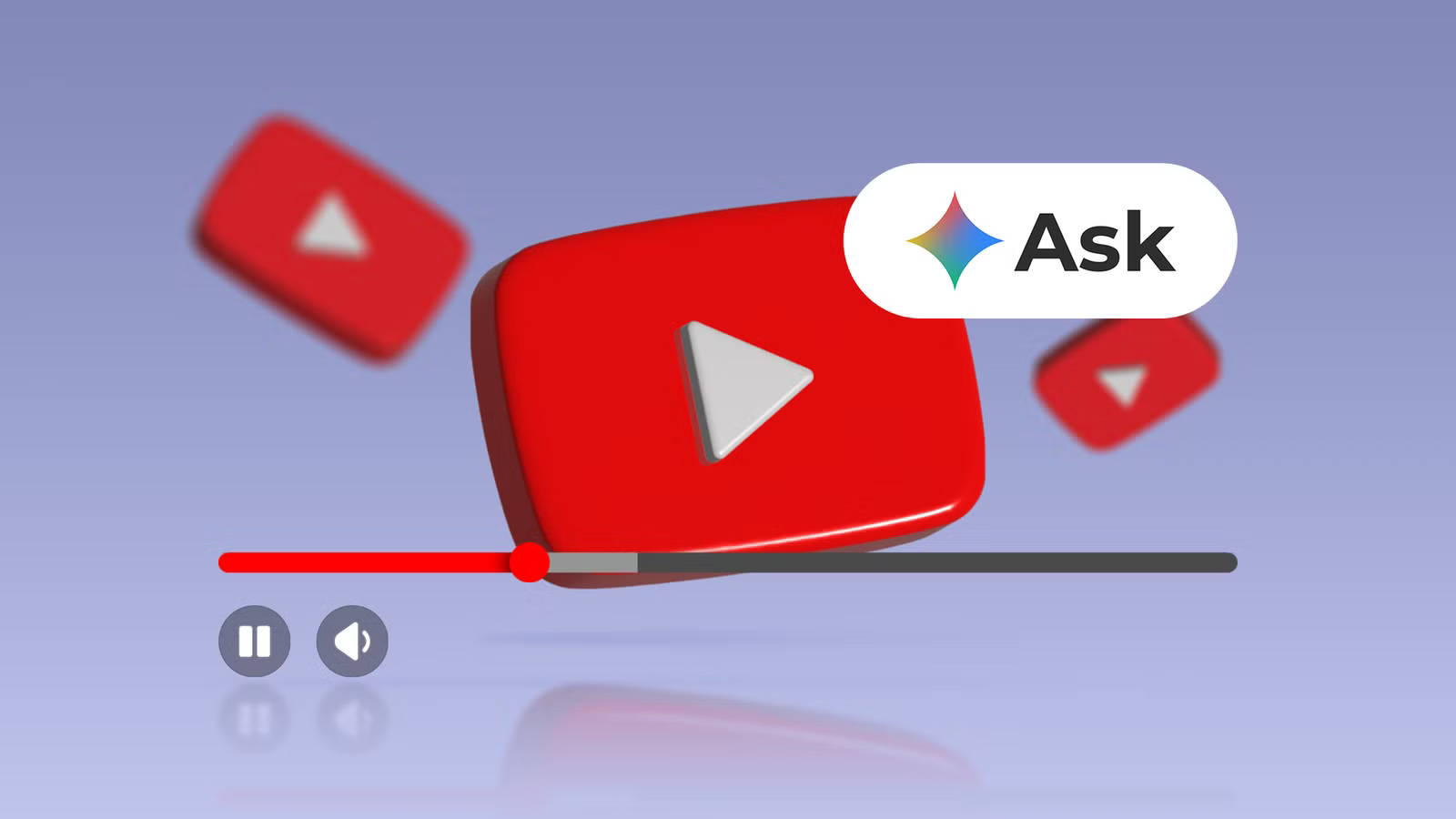
Ask YouTube: The Future of AI-Driven Content Discovery

Table of Contents:
Google is fundamentally reshaping how users interact with its video ecosystem through a new experimental feature: Ask YouTube. This conversational search interface represents a paradigm shift, moving away from static lists of links toward a dynamic, AI-generated dialogue experience. By integrating Large Language Models (LLMs) directly into the platform, Google aims to reduce the "discovery friction" that often accompanies searching for information within a library of billions of videos.
The Mechanics of the Conversational Interface
The feature, currently available to a subset of YouTube Premium subscribers in the United States, appears as an intuitive button within the search bar. When a user prompts the system—for example, by asking for the history of the Apollo 11 mission or complex sports rules—the interface generates a dedicated summary page.
-
Contextual Summarization: Instead of simply presenting video thumbnails, the system parses video transcripts and metadata to provide an immediate textual summary.
-
Dynamic Sequencing: It creates categorized clusters of content, including long-form educational videos, engaging YouTube Shorts, and curated thematic playlists.
-
Iterative Inquiry: A critical feature is the ability to ask follow-up questions directly, allowing users to drill down into specific details without restarting their search journey.
Data-Driven Insights and Current Challenges
While the technology is transformative, it is not without hurdles. According to recent internal and external reports, while user engagement with AI-enhanced search interfaces has shown an average increase of 15-20% in session duration in controlled environments, the issue of "hallucinations" remains a significant barrier.
In early testing, the system exhibited inaccuracies, such as misrepresenting technical specifications for specific hardware (e.g., the Steam Controller). As Google integrates its Gemini architecture into this search flow, it aims to reduce such errors. Statistics from the industry indicate that search engines utilizing generative AI currently face a 3-5% hallucination rate for complex factual queries, a figure Google is working to reduce below 1% through reinforced learning and improved real-time verification modules.
Furthermore, industry analysts suggest that over 65% of Gen Z users now prefer interactive search interfaces over traditional keyword-based results. This demographic shift is forcing platforms like YouTube to prioritize conversational AI to maintain market dominance. The complexity of balancing speed with accuracy is a monumental task: processing a query involves real-time indexing of millions of data points across video transcripts, comments, and creator-provided descriptions. Google is currently running multi-stage verification tests where AI models must cross-reference their own generated answers against trusted video sources before presenting them to the user.
The Path Forward: Implications for Creators and Users
This transition holds massive implications for content creators. If users can obtain a synthesized answer without clicking through to a specific video, the traditional "click-through rate" (CTR) model may evolve. However, Google’s design philosophy suggests that by providing better contextual markers—such as precise timestamps—the platform actually increases the likelihood of users watching the most relevant segments of a video.
Creators who provide high-quality, structured information—using chapters, accurate captions, and clear video descriptions—will likely see a boost in their reach. Conversely, low-quality content that relies on clickbait titles without substantive information may see a drop in traffic. Ultimately, Ask YouTube is not merely a search update; it is an attempt to turn the world's largest video repository into an interactive, real-time knowledge assistant. Whether this will lead to a more efficient information economy or a decrease in organic engagement for smaller creators remains the central question of 2026. The platform's success will ultimately depend on its ability to maintain creator trust while providing users with the lightning-fast, accurate information they now demand as the default standard for internet interaction.
Leave a Comment
Comments
No comments yet. Be the first to comment!
You may also like

3 Awards in 1 Year….. MadBid must be doing something right
18-09-2012
Rating: 0 | Views: 413 | Reading time: 1 min
Read →
How Telegram Reduced the Quality of Media Content
21-11-2025
Rating: 0 | Views: 2267 | Reading time: 3 min
Read →
Google is converting Gemini into a TikTok-like format
13-10-2025
Rating: 0 | Views: 2170 | Reading time: 3 min
Read →
TikTok Shop Restructures: Cuts and Organizational Changes in the US
28-05-2025
Rating: 0 | Views: 2783 | Reading time: 3 min
Read →
Social Media in 2026: From Reach to Systemic Brand Presence
07-01-2026
Rating: 0 | Views: 2038 | Reading time: 4 min
Read →